

Cloud9’s Non-Competitive Year Raises the Question: What Happens When CDL Teams Don’t Care?
Cloud9 New York just delivered one of the worst seasons in CDL history, and the bigger problem is that the league gives teams almost no reason not to repeat this exact blueprint.
A season that bordered on non-competitive
On paper, Cloud9’s Black Ops 7 campaign isn’t just bad; it looks almost non‑serious. They finished 4-31 in series, dead last in the league, and were routinely out of matches before they even began. Before we get into it, this is not an attack on the players or staff of the franchise. Just a breakdown of what the franchise has achieved this season.
In opening maps, they went 6-29, again the worst mark in the CDL, which tells you they were starting from behind almost every single time. Hardpoint was a disaster at 9-48, while Overload wasn’t far behind at 8-27.
The only bright spot, if you can even call it that, was Search and Destroy, where they went 21-22, roughly mid‑table in the CDL, but even that competence never translated into actual series wins. They were 2-6 in map fives, and they haven’t beaten a proper pro opponent in a series since March 13, when they took down the Toronto KOI, which now looks like a miracle. Since then, it’s been a long, bleak stretch of failure which includes 18 straight losses to professional teams.
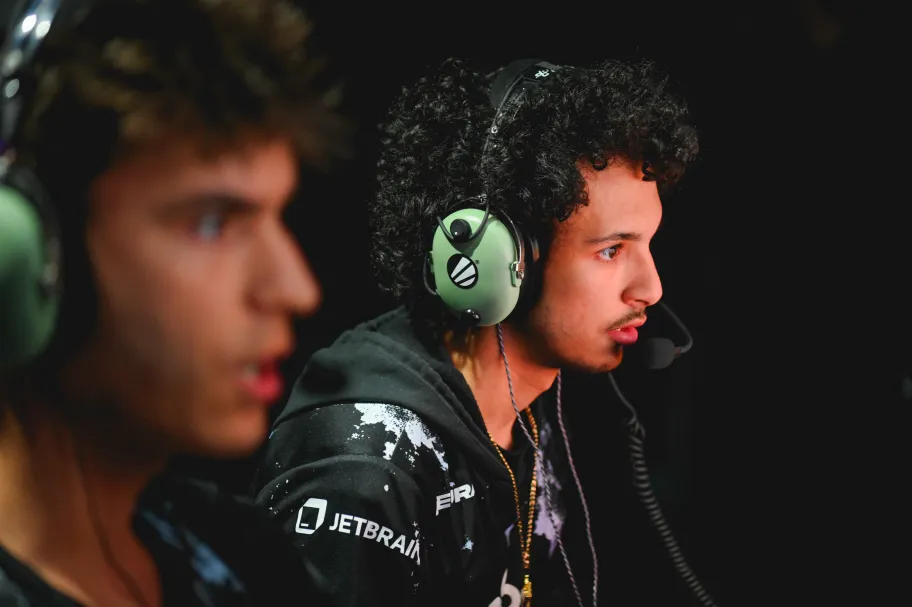
📸 Photo by @CODLeague
LAN results that never justified the slot
If you’re going to have a rough online split, there’s still room to redeem yourself on LAN. Cloud9 never did. They went Top 12 at all three LANs they attended, failed to qualify for Major II, and failed to qualify for Champs altogether. Their overall LAN record was 1-4, and the lone win came against an amateur team (ROC), not another franchise.
Across the season, they were swept 11 times, 31% of all series they played, and in their last eight series, they managed to win just six maps total. That isn’t just underperforming; that’s operating at a level where fans, players, and the league itself have to ask whether the organization was genuinely trying to field a competitive roster.
How we got here: from Subliners champions to a hollowed-out project
The most frustrating part is that this situation was avoidable. Cloud9 bought the New York Subliners slot heading into the 2025 season, inheriting a brand and core that had real championship pedigree & interesting brand. The Subliners won Champs in 2023 and had a roster with serious star power: Paco "HyDra" Rusiewiez, Matthew "KiSMET" Tinsley, Cesar "Skyz" Bueno, Daunte "Sib" Gray, and a highly respected staff in DREAL and Sender.
Instead of investing in that core or building around it, potentially even buying a player like Thomas "Scrap" Ernst, who reportedly wanted to team with HyDra, Cloud9 stripped the roster for parts. They sold off the talent, gutted the infrastructure, and never truly replaced it with a system or lineup that reflected the same ambition. Two seasons later, their combined record is 16-55, and the franchise feels less like a contender and more like a team waiting to be replaced.
The structural issue: no real punishment for not trying
The heart of the problem is that the CDL, as a franchised league, doesn’t meaningfully punish this behavior. Cloud9 can assemble a bottom‑tier roster, spend as little as they want relative to other orgs both in competitiveness & brand growth, finish 4-31, and the only consequence is missing Champs, a tournament they never had realistic hopes of winning anyway. There’s no relegation, no perceived meaningful financial penalty tied to performance, and no perceived structural mechanism forcing them to treat competitive integrity as a priority instead of an optional expense.
-1783465086429.webp)
📸 Photo by @CODLeague
In traditional relegation systems, a season like this would put a slot at risk, pressure ownership, and create a natural incentive to improve. In the CDL’s current format, the slot is effectively protected, and the league’s expansion ambitions can be quietly undermined. An org can buy a franchise, hollow it out, field bargain rosters for years, and still occupy a space that could be used by groups willing to spend and build seriously. If the League had 24-32 teams, having a handful of teams act like the Sacramento Kings or Cleveland Browns isn't the biggest issue. But when we have so few teams and multiple are not putting the same effort level as other teams, it impacts the League more.
The knock-on effect for the league’s future
Cloud9 New York’s tenure, 16-55 over two seasons, will inevitably become ammunition against expansion, even though they were approved to buy the slot from a team that had proved a championship‑level model was possible. It raises uncomfortable questions: if one greenlit org can strip a winning core, under‑invest, and drag the brand into the basement, what stops another from doing the same?
Without more accountability mechanisms, the League is relying on ownership goodwill rather than enforced standards. That’s risky. Fans want to see all 12 squads who are genuinely competitive, not half the League grinding while one or two are treating a CDL slot like a marketing asset and nothing more. If the CDL wants to sell itself as a top‑tier esports ecosystem, it has to address the reality that, right now, there’s no hard line between “rebuilding” and “not really trying”, and Cloud9’s season is the clearest example of what happens when an org leans too far toward the latter.

